



Alopecia occurs gradually and can take place in localised areas (patches) or in the whole scalp (diffuse).
Approximately, people lose about 100 hairs daily.
The scalp of a male contains about 100,000 hairs.
The main causes of hair loss are the following:
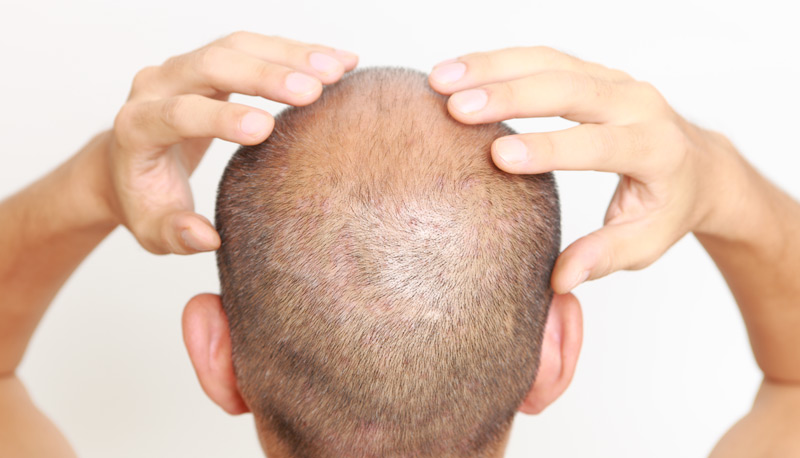
HERITAGE
Both men and women tend to lose thickness and hair count with age. This type of baldness is usually not caused by a disease and is related to aging, inheritance and changes in testosterone levels. Hereditary baldness affects men much more than women. This type of fall is also called male pattern baldness and can happen at any time after puberty. About 80% of all men show signs of male pattern baldness at the age of 70.
PHYSICAL OR EMOTIONAL STRESS
Physical or emotional stress can cause half to three quarters of hair to fall into the scalp. Hair tends to fall severely while shampooing, combing, or running your hands through your hair. This type of hair fall is usually temporary, but sometimes it can be prolonged or even chronic.
The causes of this type of hair loss are:
- High fever or severe infection
- Giving Birth
- Major surgery, serious illness, sudden bleeding
- Intense emotional stress
- Drastic diets, especially those that do not contain enough protein.
- Drugs, including retinoids, birth control pills, beta blockers, calcium channel blockers, certain antidepressants, NSAIDs (including ibuprofen).
Hair loss can be abundant at first, then gradually decrease or stop gradually.
OTHER CAUSES
Other causes of hair loss, especially if it is an unusual pattern include:
- Alopecia areata (patches of baldness that occur on the scalp, beard and possibly eyebrows. Eyelashes can also fall off).
- Autoimmune disorders such as lupus.
- Certain infectious diseases such as syphilis.
- Excessive use of shampoo and hair dryer.
- Hormonal changes.
- Thyroid diseases.
- Nervous habits such as tearing your hair continuously or rubbing your scalp.
- Ringworm of the head (ringworm of the scalp).
- Tumor of the ovary or adrenal glands.
- Hairstyles that put too much tension on the hair follicles.
Can you prevent or avoid hair loss?
There is no way to prevent male pattern baldness (or female pattern baldness) because it is a genetic trait, which means that a gene for baldness has been inherited. However, there is medication (with or without a prescription) that can mitigate the effect of this fall.
Beyond male pattern baldness or androgenetic alopecia, depending on the type of alopecia, different actions can be taken to prevent these.
Hair loss treatment
Depending on your type of fall, there are various treatments available. If a medication is causing your hair loss, your doctor may prescribe a different medication. Recognizing and treating an infection may help stop the hair loss. Correcting a hormonal imbalance can prevent hair loss.
Medications can also help slow or prevent the development of common baldness. For example, minoxidil, which is available without a prescription. It is applied on the scalp topically and both men and women can use it.
Another medicine, finasteride, this one normally requires a medical prescription (it is advisable to perform a blood test before starting the medication), it is taken in tablets and is only recommended for men. The results of these medications are not immediate and you have to wait several months (sometimes up to 6 months) to be able to notice their effects. It should also be borne in mind that if the intake of both medications is stopped suddenly a commonly called rebound effect could take place and that part or all of the recovered or maintained hair will fall.
Finally, and thanks to advances in hair implant techniques, a large number of men and woman are turning to hair transplants performed using the FUE technique to solve or alleviate hair loss.