



What is the PRP used for?
Platelet Rich Plasma treatment is a new technique that allows the isolation and use of growth factors present in the patient’s own blood to enhance, accelerate and stimulate tissue regeneration.
Surely you have heard about this treatment in sports medicine, since its use is very common in the treatment of bone, muscle and joint injuries of elite athletes.
Its application at the capillary level stimulates the formation of collagen, elastin and hyaluronic acid, also increases vascularization at the level of the hair follicle so this type of treatment is indicated to stop hair loss and enhance regeneration in patients with moderate hair loss.
How does the treatment work?
PRP (Platelet Rich Plasma treatment) consists of the introduction of plasma rich in growth factors that release the patient’s own platelets by means of microinjections in the scalp practically painless. Anyway to avoid minor discomfort, anesthesia or ice can be applied locally.
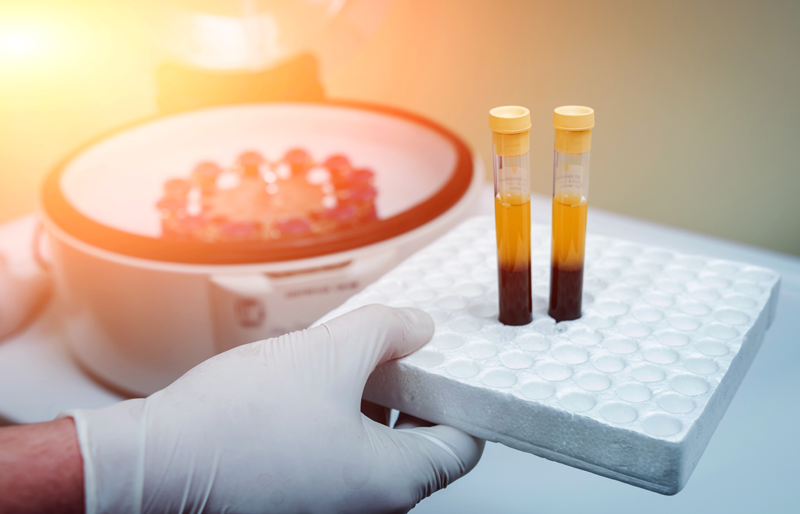
To obtain the plasma rich in growth factors, a small blood sample is taken from the patient and the plasma fractions are separated by controlled centrifugation. The “platelet rich plasma” is then injected at the capillary level to stimulate its regeneration. Once the treatment is finished, normal activity can be resumed immediately.
The potential for the use of PRP to promote hair growth and healing after hair transplantation focuses on three functional applications:
- Preserve and improve the viability of the hair follicle during and after a hair transplant.
- Stimulate and enhance tissue repair and healing after hair transplantation.
- Revitalise inactive hair follicles and stimulate hair growth.
Preserve and improve the viability of follicular units
Within the time that follicular units are removed from a donor area of the scalp and transplanted into a recipient area, follicular units are subject to damage due to several causes:
- Dehydration if donor follicles are not sufficiently moistened between extraction and transplantation.
- Lack of oxygen and nutrients because they have been separated from the blood supply from the collection period until the time of transplantation.
- Temperature and changes in acid / alkaline levels in the follicle environment.
- Revascularisation lesion when donor follicles are transplanted to the recipient site and must adapt again to have a blood supply.
Stimulate and enhance tissue repair and healing
In the activity of stimulating tissue repair and healing after a surgical injury, the growth factors stored in platelets are released at a point of tissue injury, stimulating tissue repair and healing. Individual growth factors such as PDGF have been used by surgeons to stimulate wound healing in hospitalized surgical patients.
The rationale for the use of PRP in outpatients of surgical hair restoration is to use the full range of platelet-associated growth factors to stimulate healing and minimize scar formation, as well as to stimulate hair growth at the maximum of transplanted follicles
A described method of applying PRP to scalp incisions is performed by injecting a PRP gel into wounds at the time of suturing. Doctors and researchers using this procedure have described better healing at the site of transplantation.
These reports are generally from individual cases or from a small number of cases. These reports do not meet the definitions of clinical trials that, for example, are required in the United States to obtain FDA approval specific to the use of PRP in hair transplantation with claims of efficacy and safety. Some researchers suggest that PRP should not be used routinely in hair transplantation to stimulate healing, but that it may be useful in patients who have had a previous injury or who have scars at the transplant site.
Researchers who oppose the routine use of PRP in hair transplantation cite the need for additional data from well-designed clinical trials.
In January 2018, the Spanish Doctors Dr. Rubina Alves and Dr. Ramon Grimalt published the results of a study carried out in Barcelona to evaluate the effect of PRP treatment together with taking medication (Minoxidil and Finasteride) in patients with male or androgenetic pattern alopecia.
The study was carried out performing the treatment of PRP together with Minoxidil 5% and another group with the treatment of PRP together with finasteride 1mg. The PRP treatment was only applied in half of the patients’ head, and a placebo solution was injected in the other half. The results showed that the area treated with PRP and medication had generated more hair and density was much higher than the patients. For more details of the study you can click here
Revitalize sleeping hair follicles
After observing an increase in the growth of transplanted hair after the use of PRP, the researchers carried out a small study of the effect of PRP on non-transplanted sleeping hair follicles. The study hypothesized that platelet growth factors can “wake up” inactive hair follicles and start the production of new hair. The PRP was applied after slightly injuring the skin of the scalp to cause platelets to release growth factors at the site of injury. Over the next four months, an improvement in hair growth and its diameter was observed, with a reduction in hair loss after four months. This use of PRP is still considered experimental, with the need for further studies.
Does the use of PRP have any contraindications?
For the PRP the person’s own blood is used. There are no risks in relation to allergic reactions or infections. It is similar to a blood donation to oneself.
The effect of PRP may be different in each person who receives it. The application of treatment with Platelet Rich Plasma is simply a method of aid for faster recovery; In addition to promoting the success of the transplant.